

SERIES 1, ISSUE 4
SHOP NOTES
What’s in the Bay This Week?
NAS-ty Steering Experience
A 1997 Defender 90 came through the doors this week. Notably, the only Defender ever offered from the factory with an automatic transmission in the NAS market.
It was booked for simple work: an oil service and a failed hood release cable. Straightforward enough.
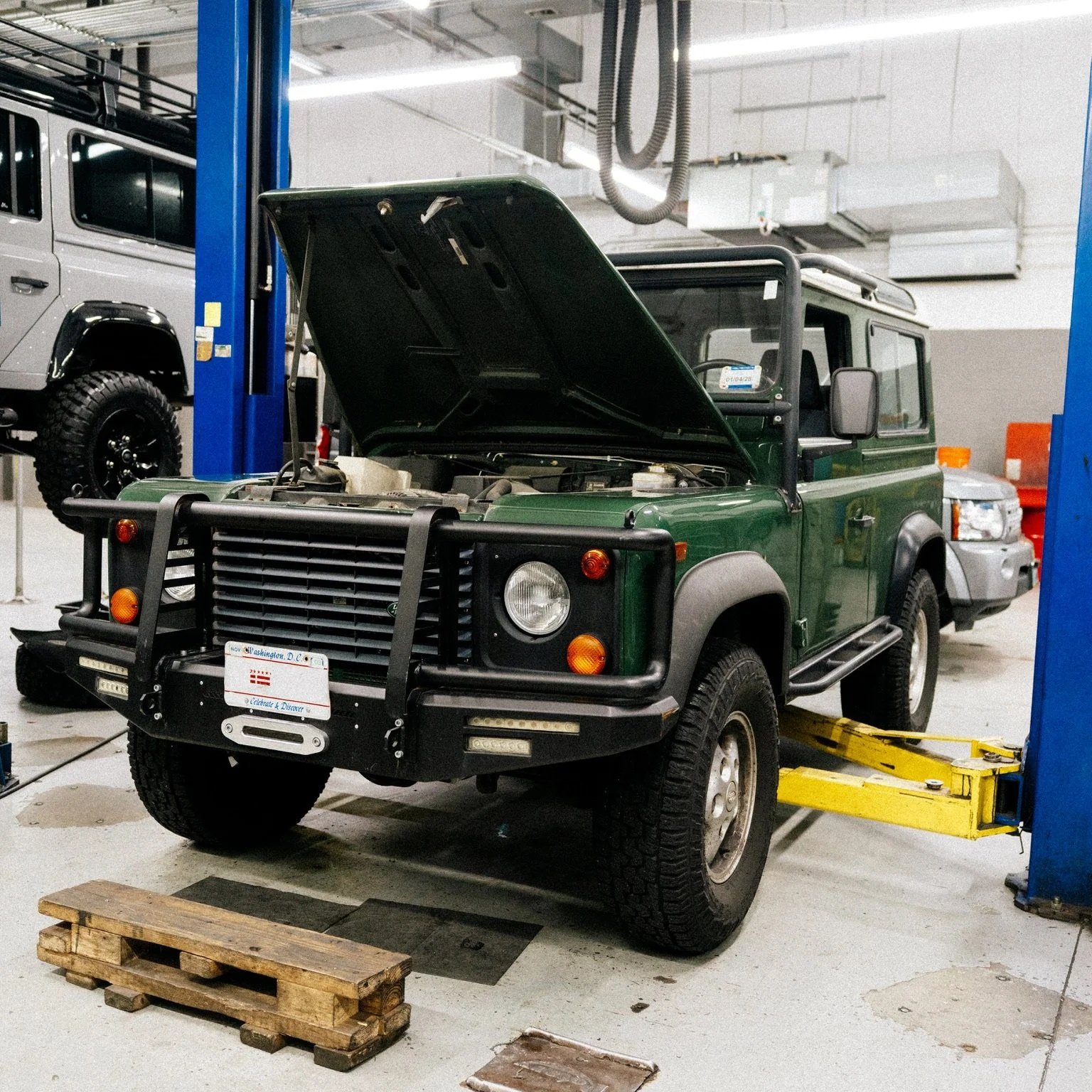
As is often the case with 25-plus-year-old trucks, the deeper story revealed itself once it was on the lift. The steering felt vague on the road, and inspection confirmed why. The steering damper was weak and no longer controlling oscillation effectively, and the pitman arm showed significant wear. Both are small components on paper, but they define how a Defender feels from behind the wheel.
We changed the oil and addressed the outstanding issues.
Maintenance keeps a Defender running. Attention keeps it driving properly.
The 12-Volt Problem
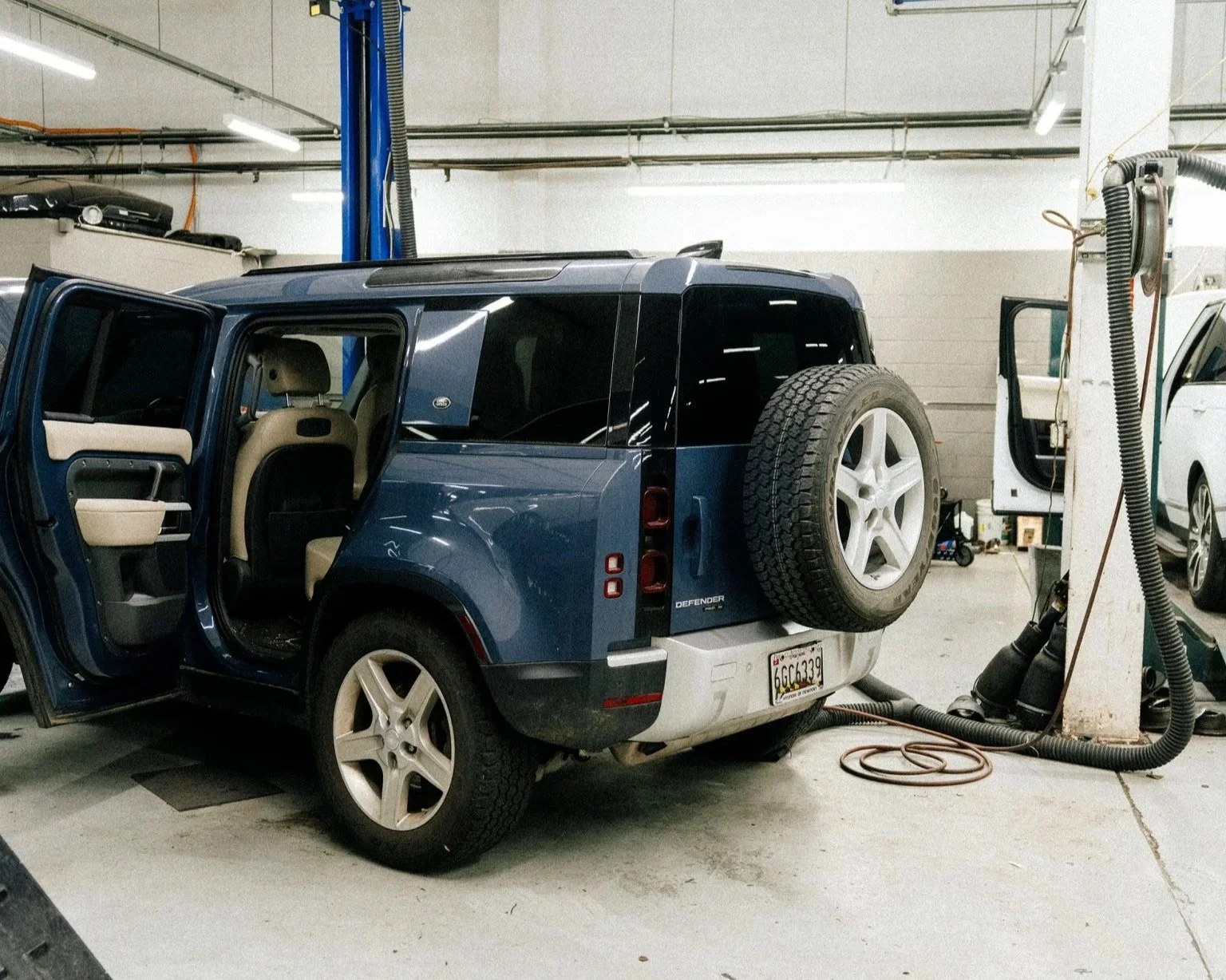
A 2020 Defender arrived on the hook this week with a complaint that the steering “wasn’t working properly.” Heavy at low speeds, inconsistent assist. Definitely an unsettling symptom in a vehicle this new.
The culprit wasn’t mechanical at all.
The battery had fully discharged, leaving the electric power steering system without the voltage it needs to operate. Modern Defenders rely on electronic assist. When the system voltage drops below the threshold, steering defaults to manual effort.
It’s a reminder that on newer trucks, drivability issues often begin with battery health. A weak or ageing battery can trigger a cascade of electronic faults that feel far more serious than they are.
Fresh battery installed. Systems reset. Steering restored.
Sometimes the fix is simple and it's the diagnosis that matters.
FIELDCRAFT TIPS
Maintenance and Troubleshooting
Salt Is The Enemy
It’s been one of those winters…
In the Washington, D.C. region, we've been hit with repeated snow and wintry mix events, leading to salt trucks rolling and brine spreading across streets and highways. As all that snow melts, the salty residue left behind doesn’t just disappear. It lingers under your wheels and on body panels.
Remember: snow is not what harms your vehicle. Salt is.
The salty mixture works its way into seams, crossmembers, outriggers, brake lines, and fasteners. It sits there, holding onto moisture and given enough time, it begins to eat away at metal.
On a body-on-frame truck, especially a Defender, your chassis is vulnerable, and once corrosion takes hold, it spreads from the inside out.
Here’s the fieldcraft to prevent the worst effects of salty roads:
1. Rinse the underside often.
Don't wash just the body, clean the chassis, the axles, and the inside of the frame rails if you can access them. Use low pressure and plenty of water. Do it after every major storm and again when temperatures rise above freezing.
2. Avoid “set it and forget it” parking.
A salt-covered truck left in a damp garage is worse than one parked outside in the cold. If you garage it, rinse it first.
3. Inspect the known trouble spots.
Rear crossmember, bulkhead corners, suspension mounts, and fuel and brake lines. Catching surface rust early allows you to treat it before it becomes structural.
4. Don’t forget the small parts.
Fasteners and brackets are often the first to go. Stainless hardware and proper coatings make a meaningful difference over time.
A chassis should age with dignity, not dissolve in silence.
If you intend to keep a vehicle for decades (as we believe you should) winter maintenance is not optional. It is part of ownership.
ROVER CULTURE
Events and Land Rover News
Defender or Pretender
In 1947, the first Land Rover was famously sketched in the sand at Red Wharf Bay by the Wilks brothers on Anglesey. From the original Series trucks through to the end of production in 2016, the Defender built its reputation the hard way; mechanical, fixable, unstoppable.
Over the years, more electronics crept in. To some enthusiasts, that was progress. To others, it was a complication. After all, when you’re crossing the Sahara, you can fix a 300Tdi with spanners and know-how. A laptop to diagnose electrical gremlins? Not so much. That’s why, in many remote corners of the world, Series 1's through 300Tdi Land Rovers are still the vehicle of choice.
Now Land Rover is reportedly preparing a smaller, fully electric “Defender Sport,” set to sit beneath the current Land Rover Defender. A smaller, compact, 'Urban-friendly' and - questionably - EV-only.
Which raises the question: can something quieter, cleaner, and software-driven still carry the Defender soul?
Would you consider an electric Defender in a smaller package?
Is it sacrilegious to even wear the name?
Perhaps the real test, as always with a Land Rover, is where people will dare to take it.
Time will tell.
AGULHAS UPDATES
Current Builds
Rhino Is Almost Ready
There’s a moment in every build when the truck stops feeling like a collection of parts and starts feeling like a whole new living, breathing thing. Rhino is there.

With the freshly painted roof back in place, the proportions have settled. The silhouette is complete again.
At the same time, the interior is away being covered in leather. This is where character deepens. The color, the stitching, the weight of the hides all shape how the truck will be experienced for the next several decades. We're keeping the color scheme under wraps for now, but look for an update on the full interior soon.
Unlike many of our builds, Rhino was not commissioned. It’s being built simply because we believed it should exist. That freedom shows in every creative, design, and structural decision thus far, all made without compromise.
Interest has already begun quietly building around this truck. When Rhino is complete, it will be offered for sale and we expect serious buyers to move quickly.
If you’ve been waiting for the right Agulhas to raise your hand for, this may be the one. We welcome discreet inquiries and early expressions of intent before it formally comes to market.
Interested parties can call us at 301.656.5651